
What you need to know about currencies
Foreign Currency and Exchange Differences: What Actually Moves the Numbers
Working with multiple currencies is not just a “bank rate” problem — it is an accounting and reporting problem. The moment you invoice, pay, borrow, lend, or hold cash in a currency that is not your functional currency, you create potential exchange differences (often called FX gains and losses).
In plain terms, an exchange difference arises because the value of the same foreign-currency amount changes when translated into your functional currency at different exchange rates. This becomes visible at three common points:
1) on initial recognition (the day you record the transaction), 2) at each reporting date (retranslation), and 3) on settlement (when the invoice is paid or the liability is cleared).
Monetary vs non-monetary: the key split
The most important technical concept is the difference between monetary items and non-monetary items.
Monetary items are balances that will be settled in a fixed or determinable number of currency units. Think: cash, bank balances, trade receivables, trade payables, loans, accrued income, and most financial liabilities. These items are typically retranslated at the closing rate at each reporting date, with exchange differences going to profit or loss.
Non-monetary items are not settled in a fixed number of currency units. Think: inventory at cost, prepayments, fixed assets measured at historical cost. These are usually kept at the historical rate (the rate on the transaction date) if measured at cost. If a non-monetary item is measured at fair value, it is translated using the rate on the date the fair value is determined, and the exchange element follows where the fair value movement goes (profit or loss or reserves, depending on the item and policy).
Exchange differences on receivables and payables
Trade debtors and creditors are classic monetary items. Even if the invoice value in EUR never changes, its value in GBP can move every day. That means:
• Your receivable can grow or shrink in GBP terms before it is paid.
• Your payable can become more expensive (or cheaper) in GBP terms before it is settled.
• The difference between the original booking rate and the closing/settlement rate becomes an FX gain or loss.
Foreign currency in practice: how it’s usually handled
In day-to-day accounting, IFRS and UK GAAP are largely aligned. You record the transaction at the exchange rate on the transaction date, then retranslate monetary items (cash, receivables, payables, loans) at the closing rate at each reporting date. The resulting movements are recognised as FX gains or losses, usually in profit or loss, and any final difference is recognised again when the balance is settled.
There are some differences in wording, presentation, and in more complex areas (such as foreign operations and hedging), but for most businesses the practical point is the same: focus on your monetary balances, keep your rates consistent, and make sure your retranslation and settlement entries are applied cleanly and on time.
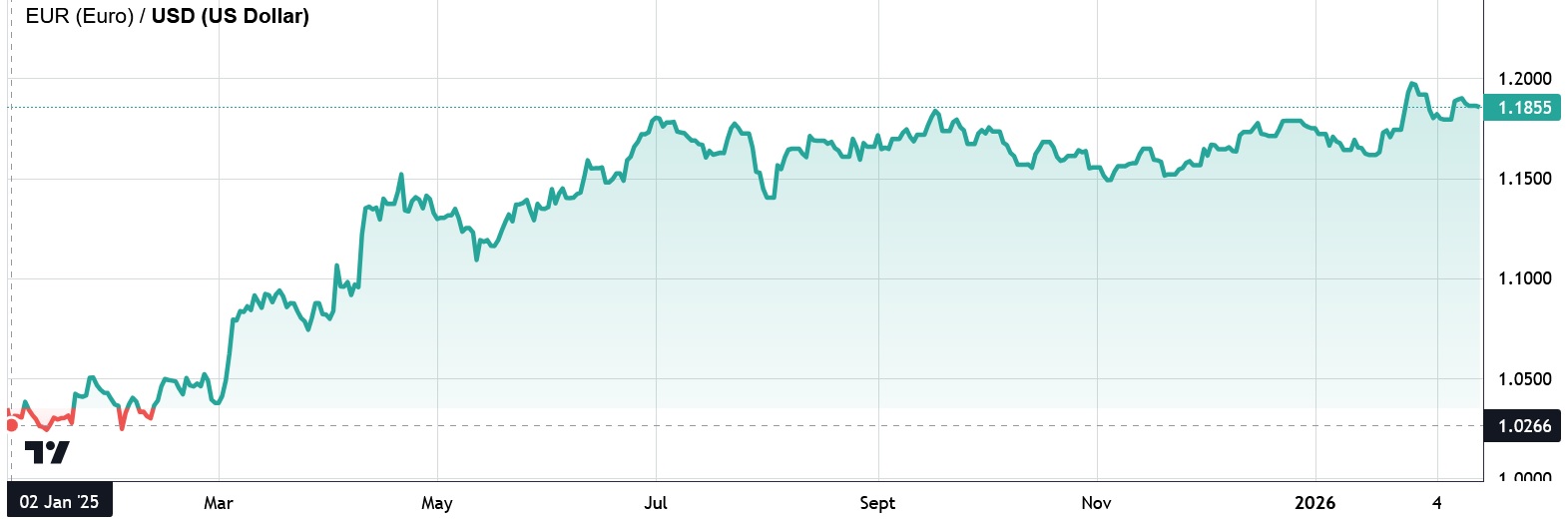
HOWEVER — exchange rates do not politely move by 0.5% and stop there.
Between early January 2025 and late July 2025, the EUR/USD rate moved from roughly 1.02–1.04 to around 1.18 (i.e., one euro bought materially more US dollars). In other words, the US dollar weakened meaningfully versus the euro over that period.
If you think the dollar will soon bounce back and you can do nothing, that is a perfectly comfortable plan. But alongside that plan, consider budgeting in multiple currencies: you set budget rates for your operating currencies, build in FX risk (volatility), and then track whether your actual income still means what you thought it meant in your base currency.
DOES IT MAKE SENSE ?